

Rice University │ Houston, Texas
For pioneering discoveries in environmental microbiology that established the field of environmental nanotechnology and revolutionized pollution remediation, with a major influence on industry standards and governmental policy.
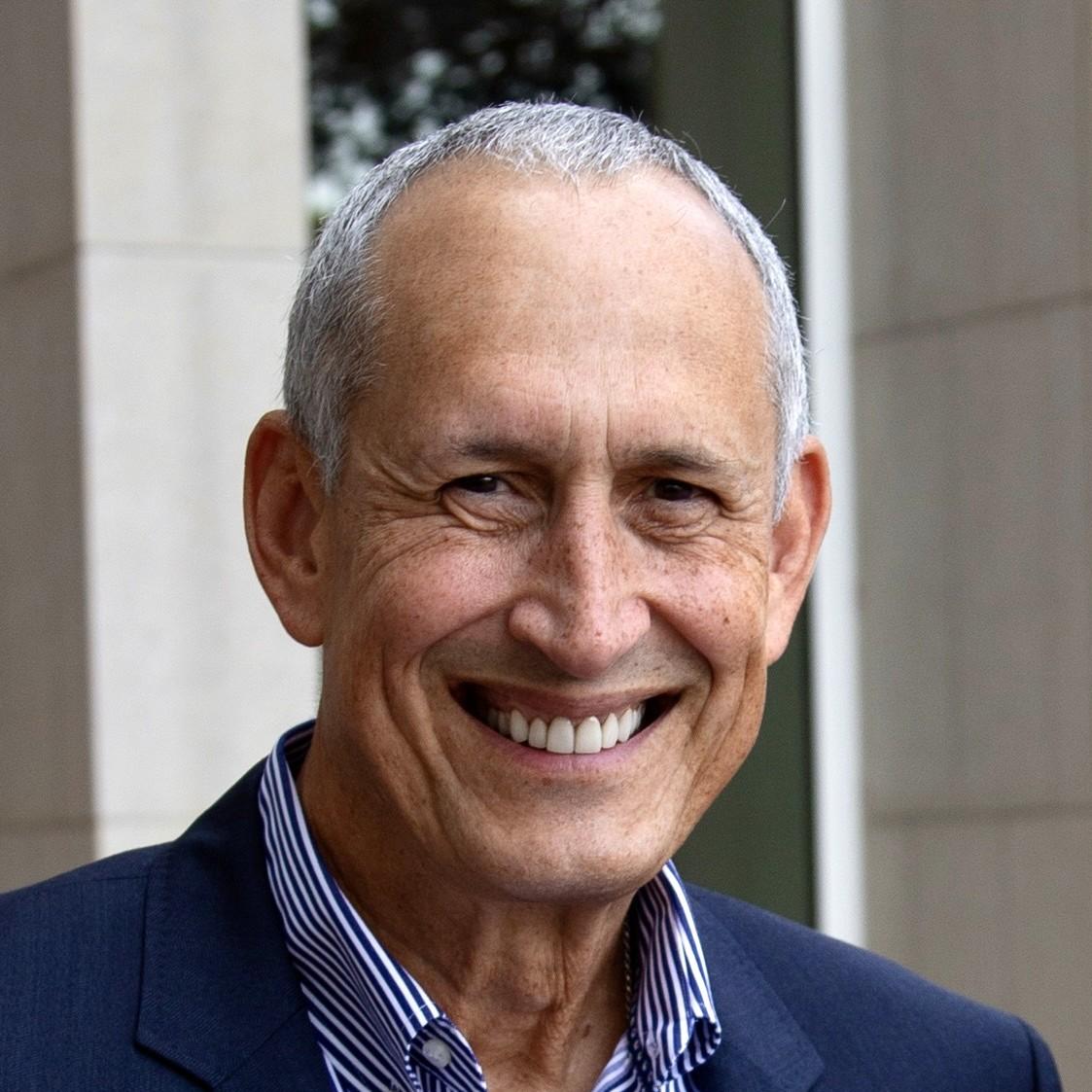
Some of the hardest environmental pollution problems are the ones you can’t see. They don’t always billow from a smokestack or float down a river in plain view. They move through soil and groundwater, seep toward reservoirs, and enter the systems that carry water through towns and cities. For millions of people across the United States and around the world, protecting clean water means understanding contaminants that travel underground. Environmental engineer Pedro Alvarez has spent his career doing exactly that. Alvarez is the George R. Brown Professor of Civil and Environmental Engineering at Rice University and the founding director of several large-scale water technology innovation programs, including the NSF Engineering Research Center on Nanotechnology-Enabled Water Treatment (NEWT) and the Rice University Water Technologies Entrepreneurship and Research (WaTER) Institute. His work focuses on environmental sustainability through bioremediation of contaminated aquifers, fate and transport of toxic chemicals, water footprint of biofuels, microbial-plant interactions, nanotechnology‑enabled water treatment and reuse, and strategies to limit the spread of antibiotic resistance.
Alvarez gravitates toward problems where science can change daily life: cleaner water, healthier communities, and smarter environmental policy. One classic hazard begins at an ordinary place, the gas station. Underground storage tanks and fuel infrastructure have a long history of leaks, and small leaks add up. Across the U.S., leaking underground storage tanks have released millions of gallons of gasoline into the ground over time. Once belowground, gasoline does not simply go away. It partitions into different chemical phases, dissolves into groundwater, and can create plumes that migrate away from the original site. The result is a complicated, layered cancer-causing contamination problem that is difficult to excavate and expensive to pump out.
Alvarez advocated for bioremediation as an innovative solution to the problem—leveraging naturally occurring gasoline-eating microbes as partners in cleanup to transform harmful compounds into less harmful ones. But environmental engineers were baffled by why bioremediation worked at some sites, but not others. Alvarez tackled that question with a forensic approach. He helped develop genetic tools, treatment methods, and decision frameworks that enabled the prediction and improvement of bioremediation performance across very different environments. His work clarified when “natural attenuation” is reliable and when intervention is needed, guidance that supports regulators and technicians as they choose between letting biology proceed, stimulating it, or changing course.
Over time, Alvarez broadened his scope to include challenges associated with modern water and wastewater treatment infrastructure. One of the most sobering issues is antibiotic resistance outside of hospitals and clinics. Wastewater treatment plants commonly receive sewage with residual antibiotics, and Alvarez discovered that these treatment systems can serve as breeding grounds for antibiotic resistant bacteria that cause infections that are very difficult to treat. Furthermore, when microbes are killed during disinfection of the treatment plant effluent, fragments of their genetic material can remain biologically active and concentrate in sediments of rivers receiving the discharge. Alvarez identified this as a pathway by which antibiotic resistance genes can be potentially taken up and proliferated by other bacteria, creating reservoirs of resistant bugs in the environment.
Here too, he looked for interventions that fit the real world. Rather than focusing primarily on centralized treatment retrofits, Alvarez’s work has advanced water treatment technologies designed for decentralized or distributed deployment, enabling innovative materials and processes to be adapted to and integrated into existing infrastructure without requiring full system replacement. In one example, he and his collaborators designed synthetic microparticles coated with a material that can capture and destroy bacteria and extracellular antibiotic‑resistance genes when stimulated by light. After treatment, the microparticles can be filtered out and reused. In Alvarez’s nanotechnology work for water treatment, the guiding idea is to use engineered materials to make cleanup and disinfection more efficient, selective, and deployable, with lower chemical and energy requirements. Through NEWT, he has helped advance approaches such as solar‑driven photocatalysis to detoxify contaminants and inactivate pathogens, as well as filtration membranes that resist biofouling. These tools are aimed at retrofitting aging infrastructure and enabling modular treatment systems for communities where clean water is hardest to secure.
His work has also ventured into a more unusual but compelling idea: using bacteriophages, which are viruses that naturally infect bacteria, but not humans, as tools for water system hygiene. In a Rice-led study on biofilms, Alvarez and collaborators explored “magnetized” bacteriophages that can be externally guided toward harmful biological agents. It might sound like science fiction, but Alvarez’s insights are augmenting biological mechanisms with modern materials to solve modern infrastructure problems.
Alvarez has helped bring visibility to problems that were once literally out of sight. He has shown how pollution behaves when it slips underground, how biology can be mobilized to clean it up, and how emerging risks like antibiotic resistance can be addressed before they become public‑health burdens. In a world where clean water is becoming both more precious and more complicated to secure, Alvarez’s work saves lives and eases the burden on civil engineers as they build for the future.
Pedro Alvarez’s trajectory reflects the international, interdisciplinary nature of environmental engineering itself. Born in Nicaragua and raised largely in Argentina, he earned his bachelor’s degree in civil engineering at McGill University and his master’s and Ph.D. in environmental engineering at the University of Michigan. From there, he built a career at the University of Iowa and mainly at Rice University that has blended fundamental research with practical applications, mentoring scientists and engineers who carry these tools into government, industry, and academia.
Information as of March 2026