

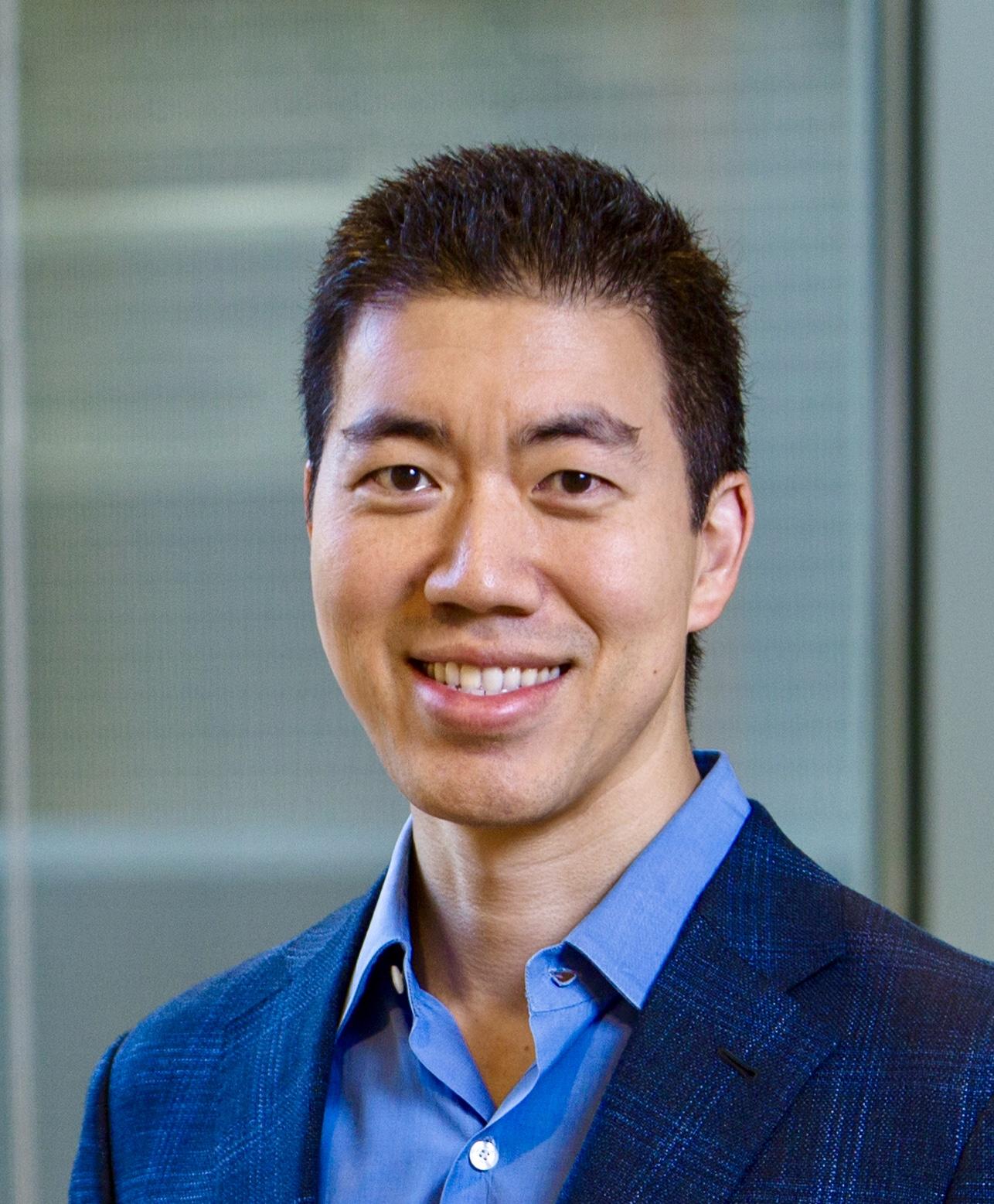
Subject: Life Science
Award: Bower Award and Prize for Achievement in Science
Broad Institute, Howard Hughes Medical Institute, and Harvard University │ Cambridge, Massachusetts
For pioneering an exciting new class of precise and effective gene-editing technologies that enable a broad range of applications in science, industry, and medicine, including the direct correction of many disease-causing mutations.
Inside every living cell, life runs on instructions. And some of the most devastating genetic diseases begin the same way: not with a missing chapter, but with a single misprinted word in that instruction manual. For a long time, medicine could read those errors but not fix them. We could diagnose, predict, and counsel, yet correcting the underlying mistake remained out of reach. Over the past decade, David Liu and his laboratory changed that reality by creating the first ways to rewrite DNA in living systems, including human patients, with a precision that once sounded like science fiction.
To appreciate what Liu and colleagues contributed, it helps to understand the challenges of early gene editing approaches. The CRISPR revolution gave scientists a way to target a specific DNA location and make a cut. But cuts are blunt instruments, and cutting DNA in most cells, including those in patients, disrupts genes, rather than correcting the genetic misspellings that cause diseases. For researchers and clinicians aiming to correct the smallest mistakes, the dream became clear: editing that fixes the right word in the right chapter, and nowhere else.
Liu’s answer was base editing. Rather than cutting both strands of DNA and hoping the cell repairs them in just the right way, base editors use chemistry to convert one DNA letter, or base, into another at a targeted location. The first widely cited demonstration fused a programmable DNA-targeting system to laboratory-engineered enzymes that chemically change a specific base, enabling direct single-letter conversions without double-strand cuts.
The practical significance is easy to state even if the molecular details are complex: a large fraction of known disease-causing mutations are single-letter changes, and base editing was built to address that problem at its source. As base editing matured, the concept broadened. Different base editors were engineered to make different kinds of letter swaps, extending the range of correctable “typos.” The field also learned, in real time, that precision is not a single number. It is a design problem. Where exactly does the conversion happen? How often does it occur at the intended site? How often elsewhere? Which cell types will tolerate the process? Liu’s group became known for pushing on all of those questions at once, improving performance to levels that offered patients suffering from grievous genetic diseases very favorable potential benefits with minimized risks.
In 2019, Liu and his laboratory developed a second leap: prime editing. Base editing corrects single-letter spelling errors, while prime editing performs “search-and-replace” on the genome of living cells. Prime editing directly writes new genetic information into a specified DNA site, expanding beyond certain single-letter swaps to a broader range of insertions, deletions, and all 12 possible substitutions. Prime editing enables the genome to be treated as something that can be precisely revised, empowering clinicians to tailor treatment to a patient’s exact mutation.
What makes these advances especially exciting is that they are not isolated tricks. They come from Liu’s broader philosophy about how biology is best engineered with the goal of tangible results in the real world. Liu and his lab didn’t just create the first precise gene editors to prove a concept, they built what amounts to open-source gene-editor creation kits that doctors and scientists can use to reliably build patient-specific prime and base editors, along with delivery methods that could make such systems usable in living organisms. That emphasis on delivery is crucial. Editing that works beautifully in a dish is not the same as editing that can safely reach the right cells in a body. The distance between the two is where many medical revolutions stall. Liu’s work is often framed not just as discovery, but as translation: building tools that can leave the lab.
And they have. During the last half decade, the Liu lab’s base editors and prime editors have been applied in real patients in at least 23 clinical trials, treating a wide range of genetic diseases including cancers, liver diseases, blood diseases, neurodegenerative diseases, muscular dystrophy, heart disease, immunodeficiencies, and other serious conditions. In all eight clinical trials with results reported thus far, the treatments have led to dramatic benefits to patients. In the case of teenager Alyssa Tapley, Liu’s technique was used to engineer healthy immune cells to attack her otherwise untreatable T-cell leukemia, saving her life. Branden Baptiste’s sickle-cell disease appears to be cured by base editing. Tracy Attebury’s broken immune system is now functional for the first time thanks to prime editing. And baby K.J. Muldoon, born with an often-fatal liver disease, was treated less than 7 months after birth by a base editor customized to correct his specific single-letter misspelling—and is now thriving.
David Liu’s career is a reminder that the most consequential engineering can be almost invisibly small. A single letter in DNA can separate health from death. By giving science ways to revise those letters with increasing precision, Liu has helped turn genetics from a language we read into a language we can, in many cases, precisely edit. And at a time when more diseases are understood as molecular instructions gone wrong, that shift is not just a technical milestone. It is a new kind of hope, grounded in the craft of rewriting life’s most fundamental text.
David Liu was born and raised in Riverside, California. He earned an A.B. from Harvard University in 1994 and a Ph.D. in organic chemistry from the University of California, Berkeley in 1999. He joined Harvard’s faculty in chemistry and chemical biology in 1999, became an investigator of the Howard Hughes Medical Institute in 2005, and directs the Merkin Institute at the Broad Institute focused on transformative technologies in healthcare.
Information as of March 2026